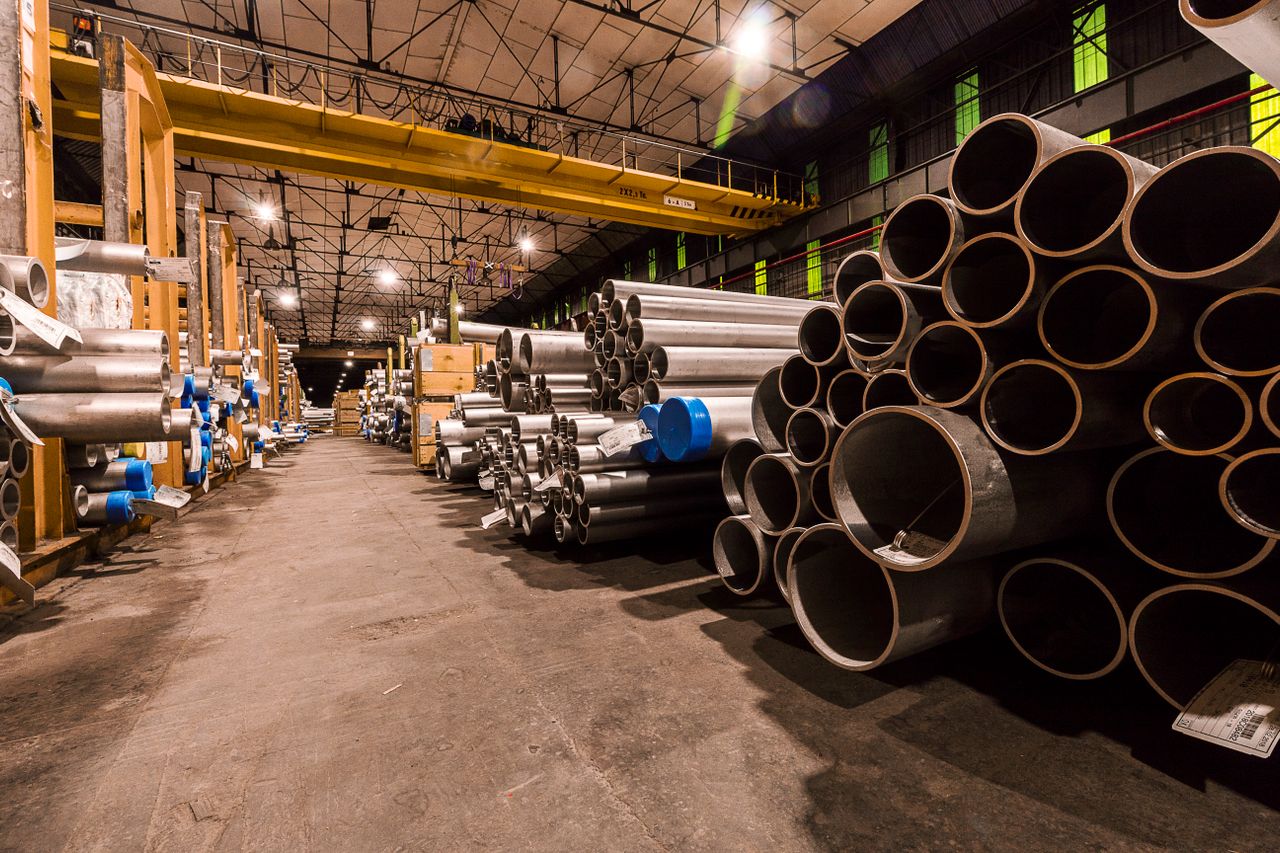
Sixteen stages.One standard of care.
Follow the complete ISKCO PIPE & TUBES production flow - from raw material and rolling to testing, galvanizing, finishing and dispatch.
Download Original Flow Chart-
01
 Material input
Stage 01 Material input
Material input
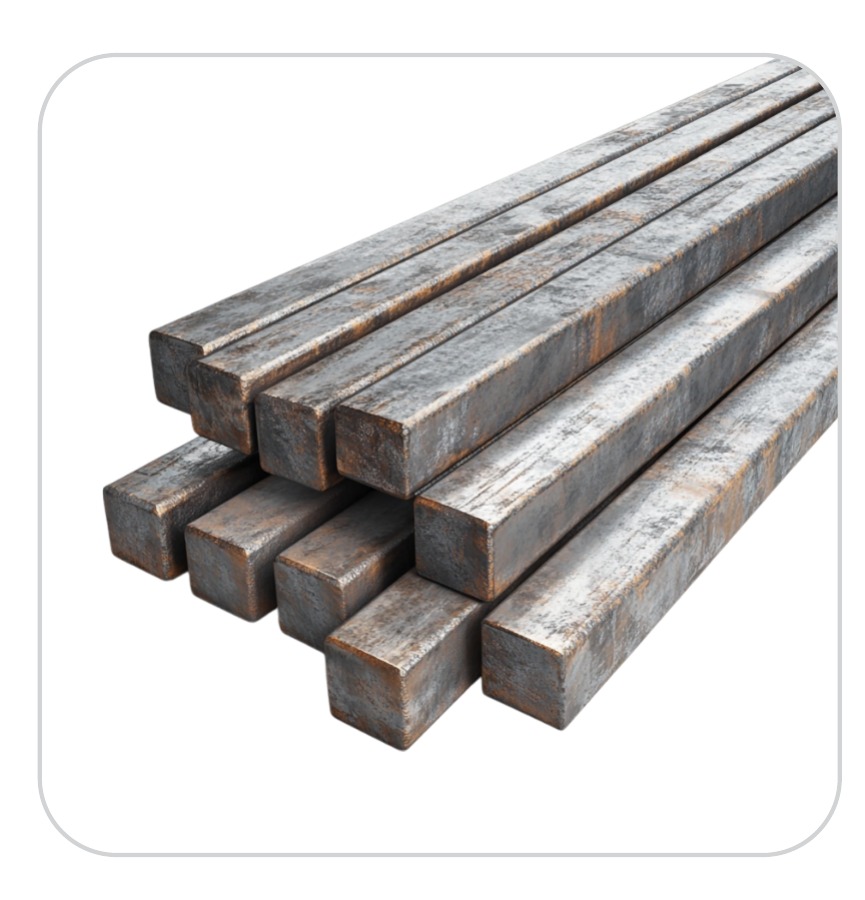
Stage 01 Material inputRaw Material / Billet
The manufacturing process begins with the selection of high-quality steel raw materials. Proper chemical composition and strength are checked to ensure durability, consistency, and compliance with industrial standards. Steel billets are semi-finished steel products used as the primary input material for pipe and tube manufacturing. These billets provide the required strength and structural integrity for further processing.
InputSteel raw material→OutputApproved billets- Chemical composition
- Strength and grade
- Surface condition
-
02
 Material verification
Stage 02 Material verification
Material verification
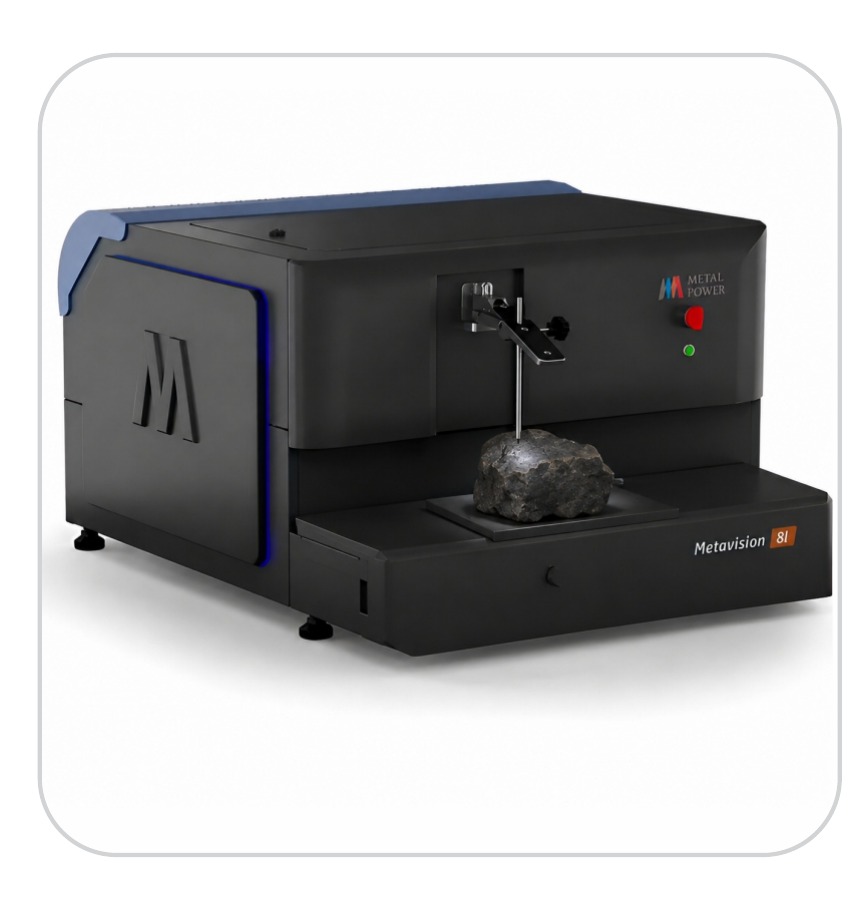
Stage 02 Material verificationBillet Inspection
Before processing, each billet undergoes a detailed inspection process to verify dimensions, surface quality, chemical composition, and structural integrity. This step ensures that only defect-free billets move forward in production.
InputIncoming billets→OutputCleared billets- Dimensional check
- Surface inspection
- Chemical analysis
-
03
 Size preparation
Stage 03 Size preparation
Size preparation
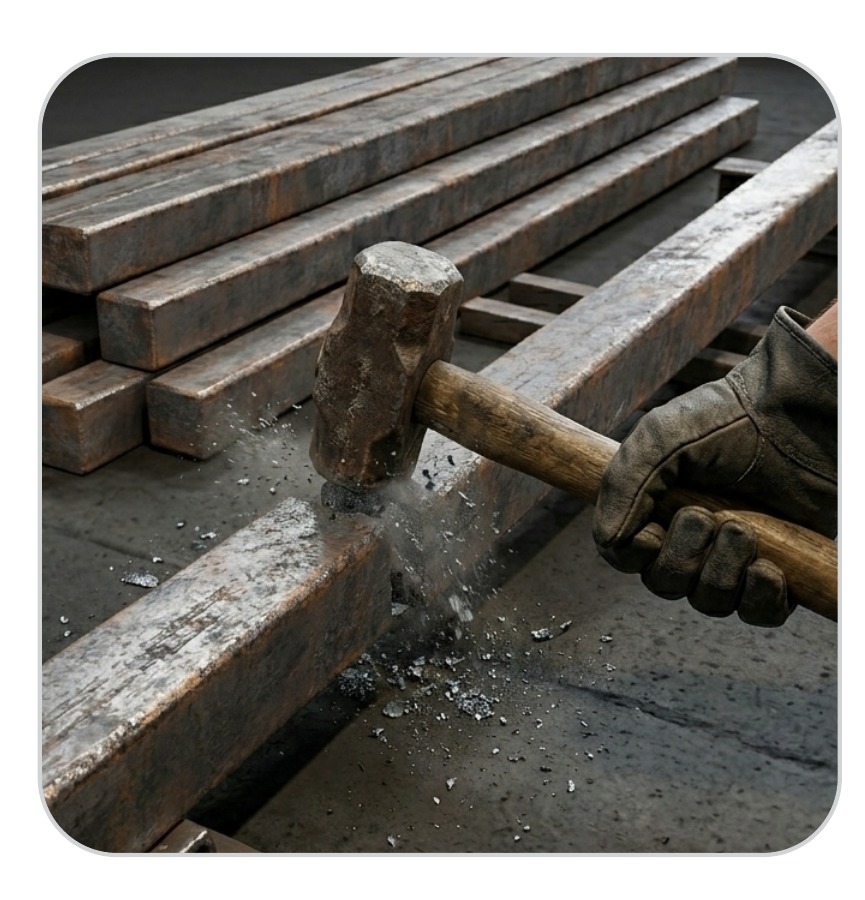
Stage 03 Size preparationShearing
The inspected billets are processed through precision shearing operations where the material is accurately cut into predetermined lengths and sizes as per production requirements. High-performance shearing machines ensure clean and accurate cuts with minimal material wastage. This process enhances production efficiency and prepares the material for smooth handling and uniform heating during subsequent manufacturing stages.
InputCleared billets→OutputSized billet lengths- Cut length
- Cut squareness
- Material utilisation
-
04
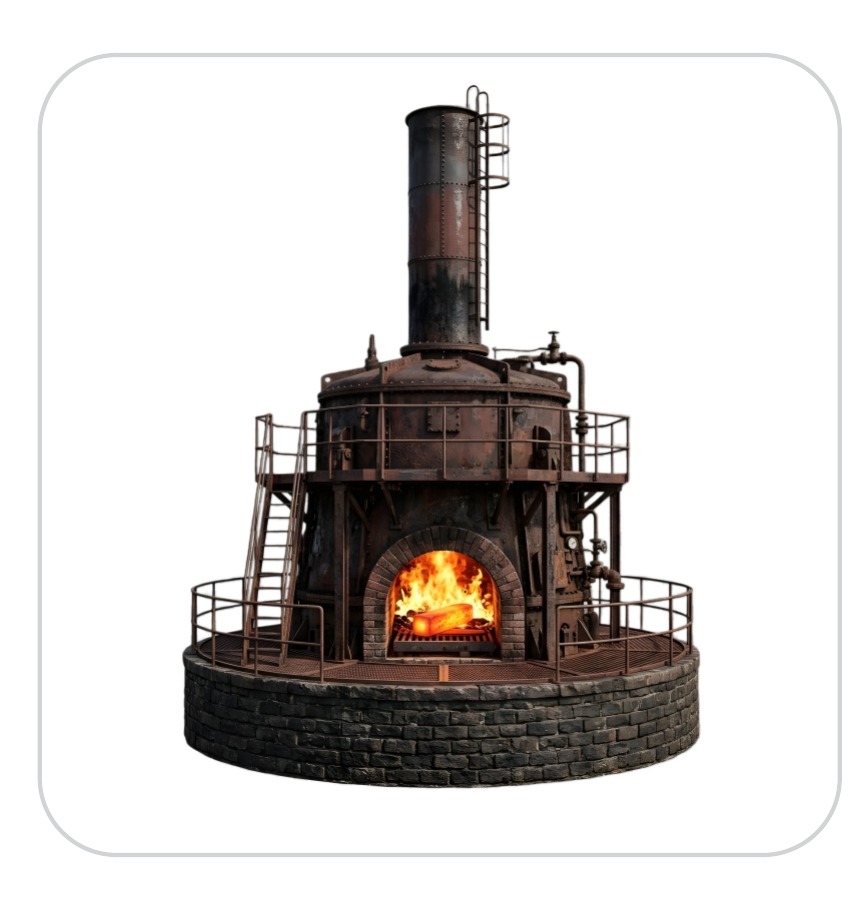 Thermal preparation
Stage 04 Thermal preparation
Thermal preparation
Stage 04 Thermal preparationRe-Heating Furnace
The cut billets are transferred to a re-heating furnace where they are heated uniformly at controlled temperatures suitable for rolling operations. The heating process improves the ductility and workability of the steel, enabling efficient deformation during rolling without compromising the metallurgical properties of the material. Proper temperature control inside the furnace is essential to achieve uniform grain structure, improved mechanical properties, and defect-free rolling performance.
InputSized billets→OutputRolling-ready billets- Furnace temperature
- Heating uniformity
- Soak time
-
05
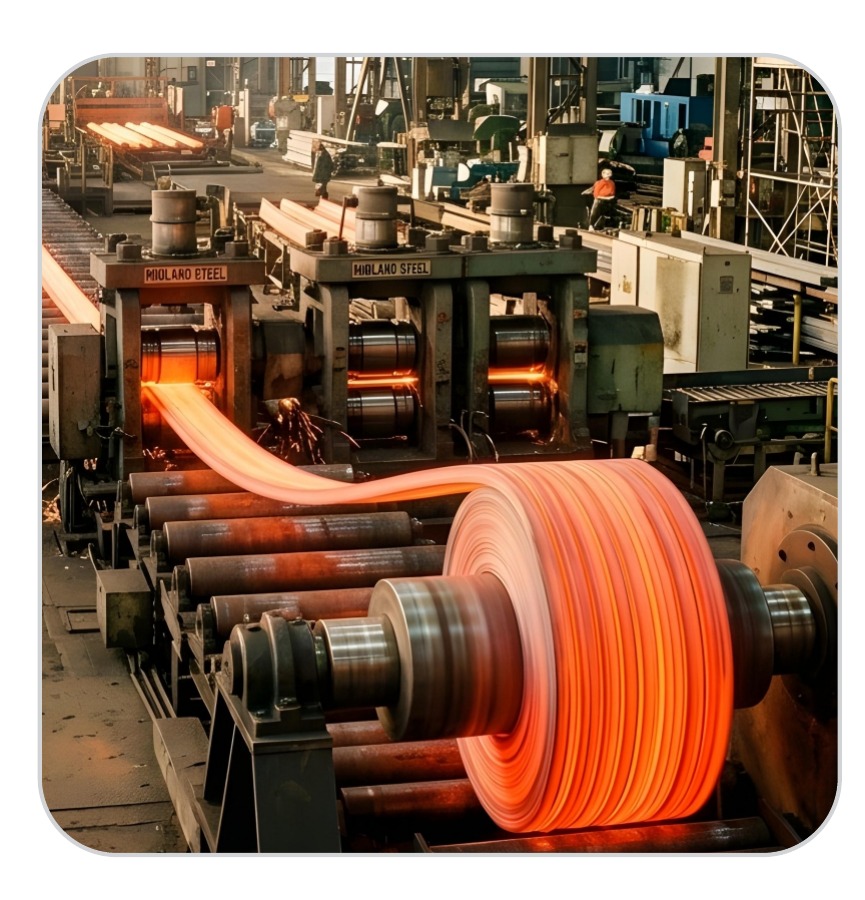 Primary forming
Stage 05 Primary forming
Primary forming
Stage 05 Primary formingHot Rolling Mill
The heated billets are passed through a series of rolling mills where the material undergoes gradual reduction and shaping to achieve the desired thickness, width, and sectional dimensions. The rolling process enhances the structural properties of the steel through controlled deformation and grain refinement. Precision rolling ensures dimensional accuracy, improved surface finish, enhanced tensile strength, and consistency in the finished steel strips or sections used for pipe manufacturing.
InputHeated billets→OutputRolled steel strip- Thickness profile
- Rolling speed
- Surface finish
-
06
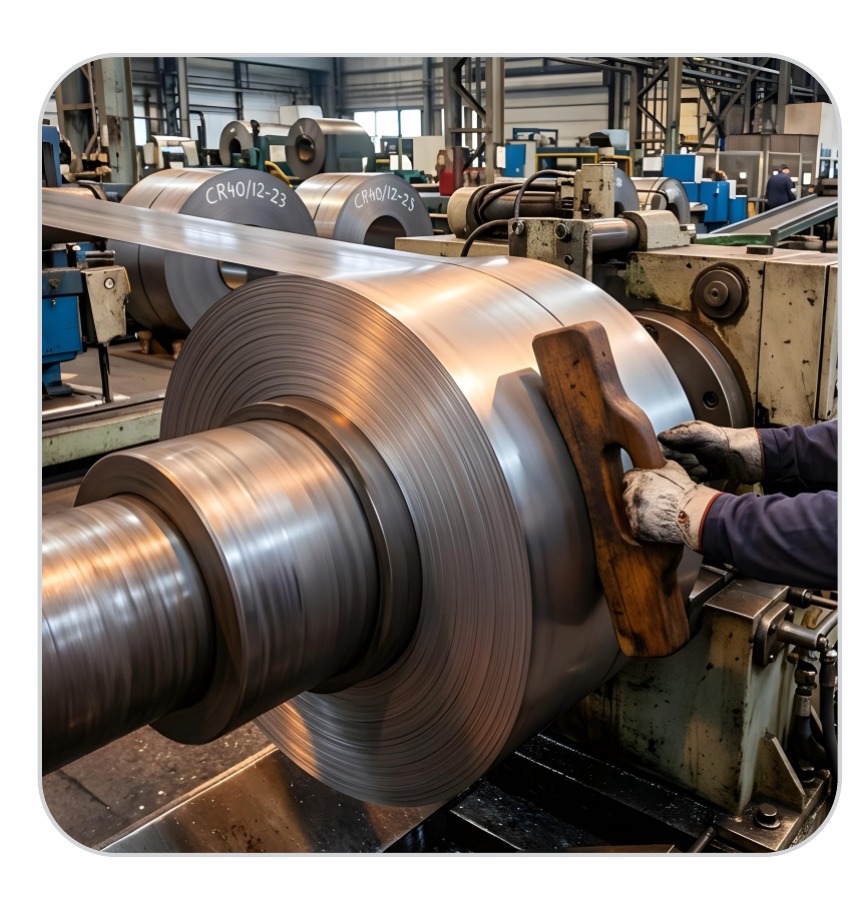 Straightening and levelling
Stage 06 Straightening and levelling
Straightening and levelling
Stage 06 Straightening and levellingCoil Build-Up
Following the rolling process, the steel material undergoes straightening and levelling operations to eliminate bends, twists, waves, and surface irregularities generated during rolling. Advanced levelling equipment ensures uniform flatness and proper alignment of the material before coil formation. This stage is essential for achieving dimensional precision, smooth surface quality, and efficient downstream processing in slitting and tube formation operations.
InputRolled strip→OutputLevelled master coil- Flatness
- Alignment
- Coil consistency
-
07
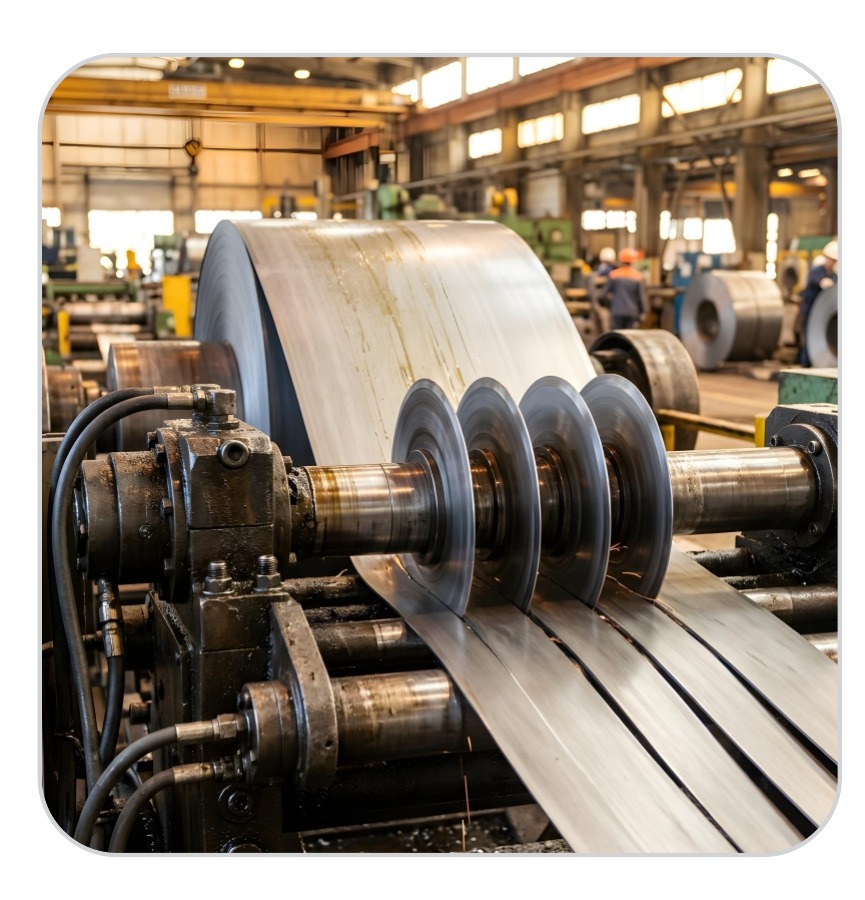 Precision sizing
Stage 07 Precision sizing
Precision sizing
Stage 07 Precision sizingSlitting
The levelled steel coils are processed through high-precision slitting machines where they are cut longitudinally into specific widths according to the required pipe and tube dimensions. The slitting process is carried out with strict dimensional tolerances to ensure uniform strip width and edge quality. Accurate slitting contributes significantly to proper tube formation, welding consistency, and overall product quality in subsequent manufacturing stages.
InputMaster coil→OutputPrecision slit strips- Slit width
- Edge quality
- Dimensional tolerance
-
08
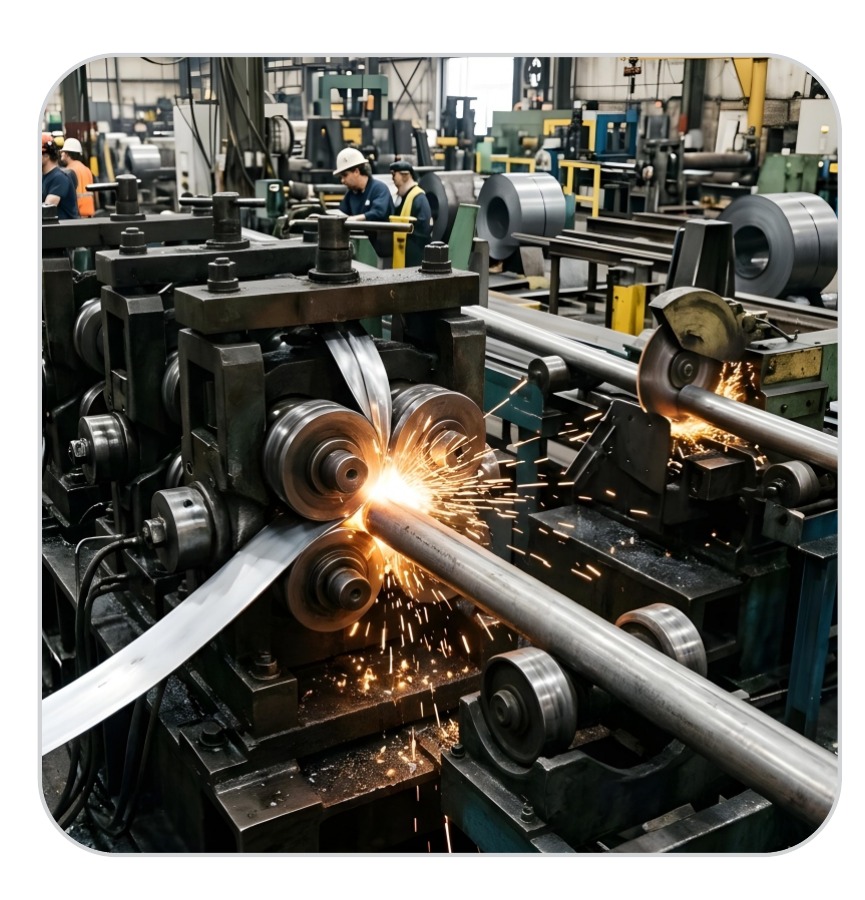 Forming and ERW welding
Stage 08 Forming and ERW welding
Forming and ERW welding
Stage 08 Forming and ERW weldingTube Mill
In the tube mill section, slit steel strips are gradually formed into round, square, or rectangular tubular shapes using advanced forming rolls and automated machinery. The open edges of the formed sections are welded continuously using the Electric Resistance Welding (ERW) process, which produces strong, uniform, and reliable weld joints. The tube mill operation is carefully controlled to maintain dimensional accuracy, structural integrity, smooth weld finish, and superior mechanical performance of the finished pipes and tubes.
InputSlit strips→OutputERW pipe and tube- Profile dimensions
- Weld integrity
- Line speed
-
09
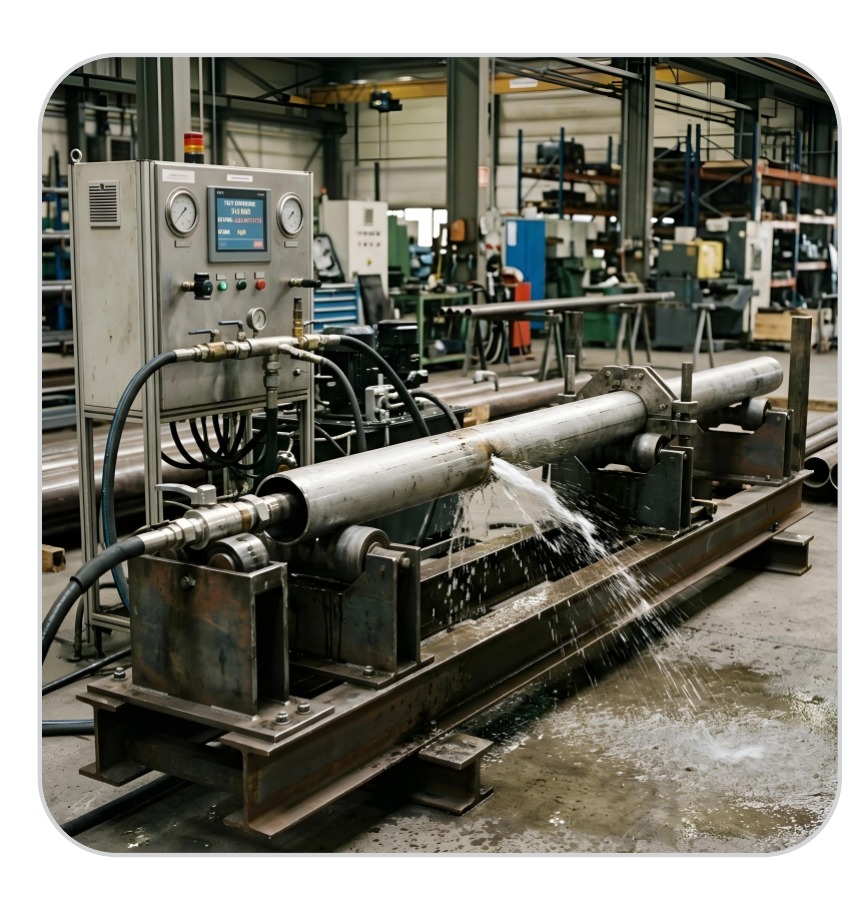 Pressure validation
Stage 09 Pressure validation
Pressure validation
Stage 09 Pressure validationHydro Testing
After tube formation, the manufactured pipes undergo hydrostatic pressure testing to verify their strength, leak-proof performance, and pressure-bearing capability. During this process, the tubes are filled with water under controlled high pressure to detect any leakage, weakness, or manufacturing defects. Hydro testing ensures compliance with industrial safety standards and guarantees reliable product performance under operating conditions.
InputFormed tubes→OutputHydro-tested tubes- Test pressure
- Leak tightness
- Pressure hold
-
10
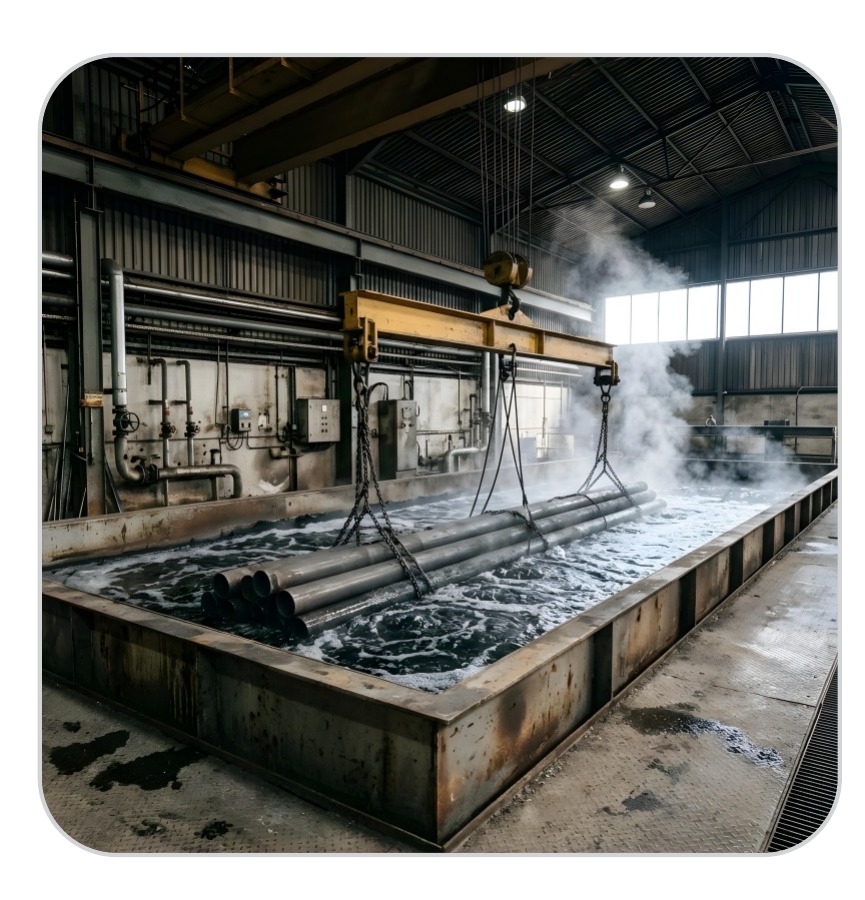 Surface preparation
Stage 10 Surface preparation
Surface preparation
Stage 10 Surface preparationDegreasing
The tubes are subjected to a degreasing process to remove oil, grease, dirt, lubricants, and other surface contaminants accumulated during manufacturing operations. Specialized cleaning solutions and surface treatment methods are used to achieve a clean and contamination-free surface. Proper degreasing is essential for ensuring effective chemical treatment and coating adhesion in subsequent pickling and galvanizing processes.
InputTested tubes→OutputOil-free surface- Surface cleanliness
- Residue removal
- Rinse condition
-
11
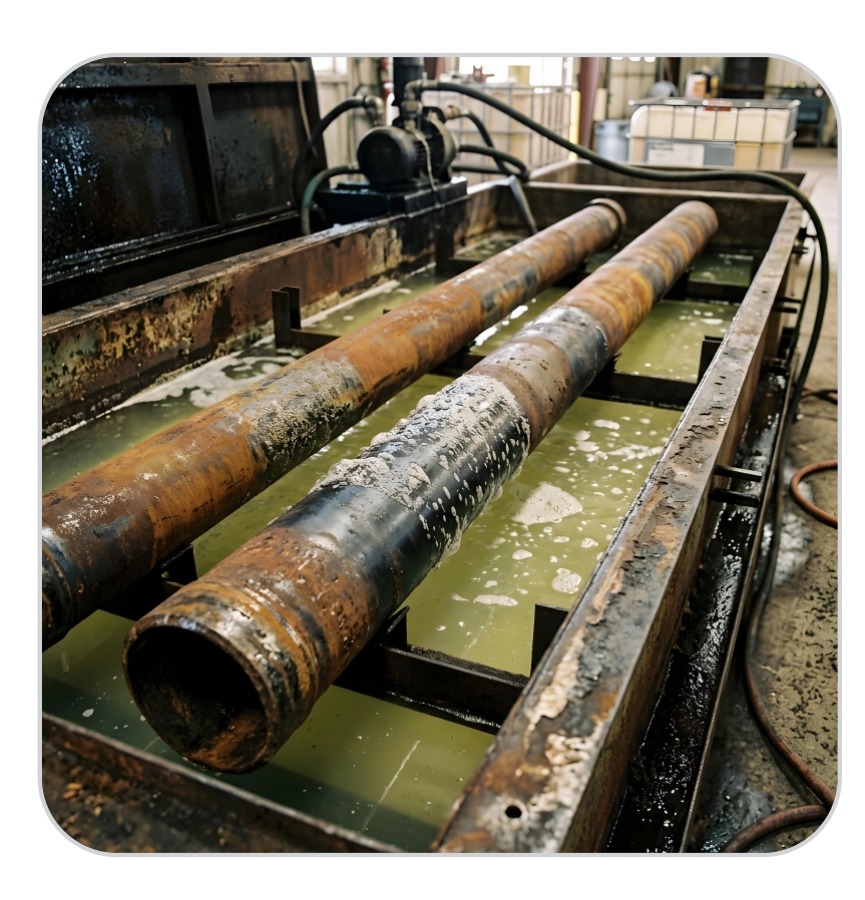 Descaling
Stage 11 Descaling
Descaling
Stage 11 DescalingPickling
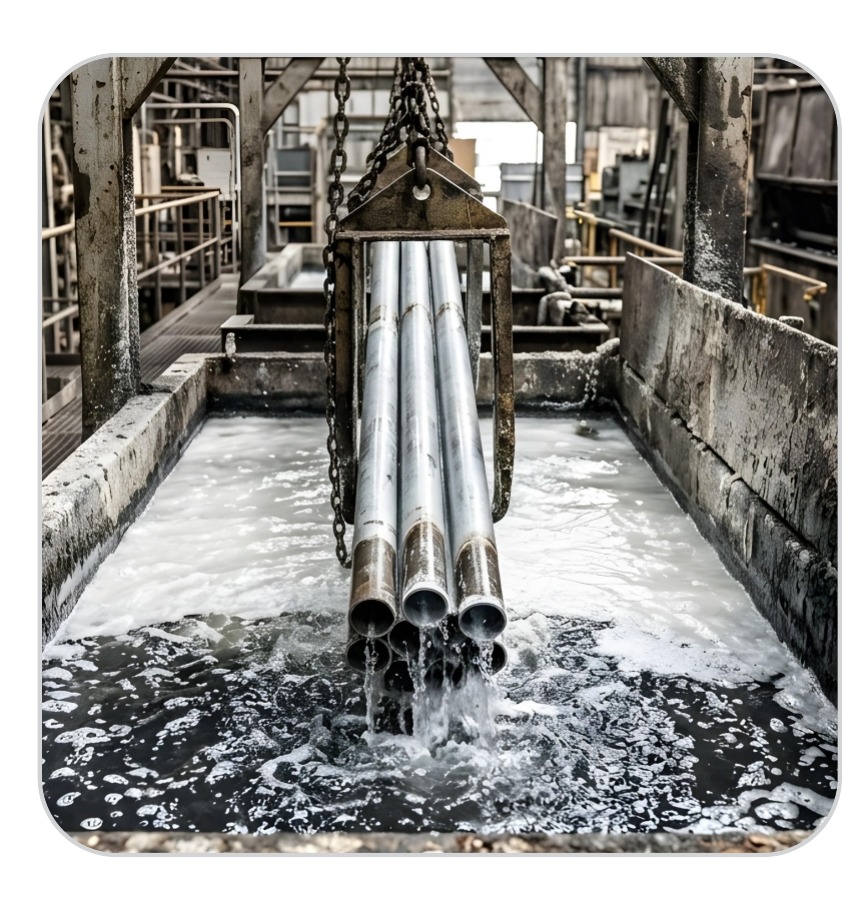
In the pickling stage, the tubes are immersed in controlled acidic solutions to remove rust, mill scale, oxidation, and other impurities from the steel surface. This chemical cleaning process produces a clean metallic surface that enhances coating adhesion and improves the overall quality of galvanizing. Proper pickling also helps in achieving uniform surface finish and long-term corrosion resistance.
InputDegreased tubes→OutputScale-free steel- Acid concentration
- Immersion time
- Rinse quality
-
12
 Surface activation
Stage 12 Surface activation
Surface activation
Stage 12 Surface activationFluxing
Following pickling, the tubes undergo a fluxing process where a specialized flux solution is applied to the cleaned steel surface. The flux coating prevents oxidation before galvanizing and promotes proper bonding between the steel substrate and molten zinc during the galvanizing process. This stage plays a vital role in ensuring uniform zinc coating thickness and improved corrosion protection.
InputPickled tubes→OutputFlux-conditioned tubes- Flux concentration
- Coverage
- Drying condition
-
13
 Protective zinc coating
Stage 13 Protective zinc coating
Protective zinc coating
Stage 13 Protective zinc coatingHot Dip Galvanizing
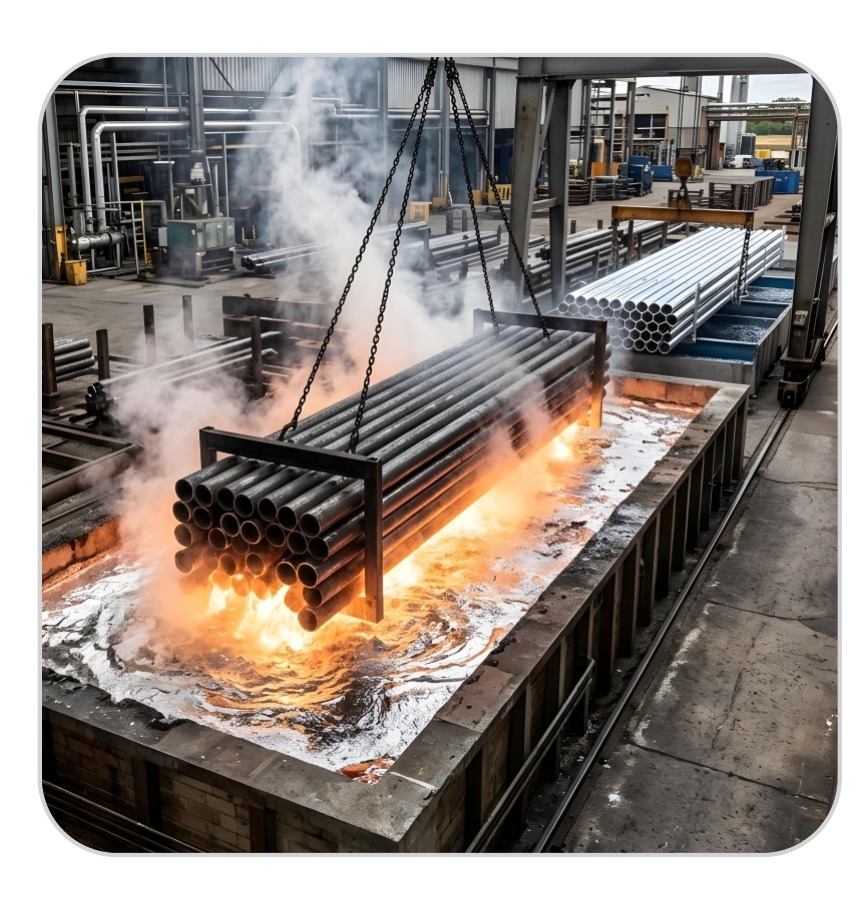
The prepared tubes are immersed in a bath of molten zinc during the hot dip galvanizing process, forming a protective metallurgical bond on the steel surface. The zinc coating provides excellent resistance against corrosion, moisture, oxidation, and harsh environmental conditions. Hot dip galvanizing significantly enhances the durability, service life, and maintenance performance of the pipes and tubes used in industrial, structural, agricultural, and infrastructure applications.
InputFluxed tubes→OutputZinc-coated tubes- Zinc bath temperature
- Coating thickness
- Surface coverage
-
14
 Cooling and verification
Stage 14 Cooling and verification
Cooling and verification
Stage 14 Cooling and verificationQuenching & Inspection
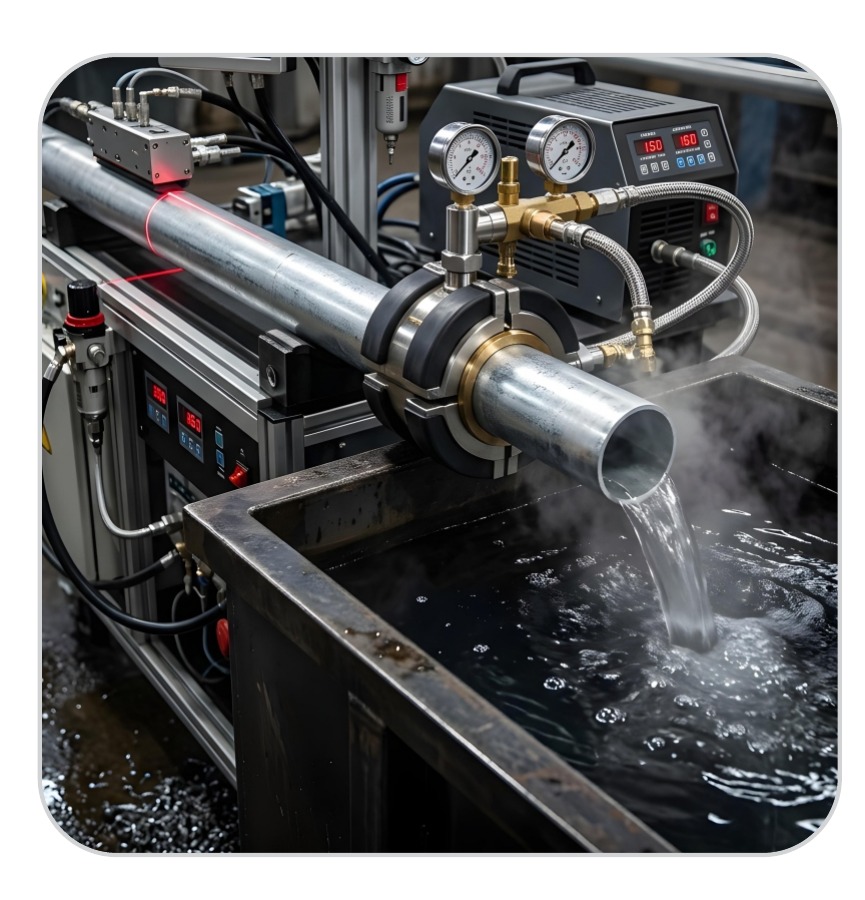
After galvanizing, the tubes are rapidly cooled through quenching to stabilize the zinc coating and improve surface finish. The galvanized products then undergo detailed inspection and quality verification processes, including coating thickness measurement, dimensional inspection, surface finish evaluation, and visual quality checks. This ensures that every product complies with defined quality standards and customer specifications before dispatch.
InputHot galvanized tubes→OutputVerified galvanized tubes- Cooling rate
- Coating thickness
- Visual inspection
-
15
 End finishing
Stage 15 End finishing
End finishing
Stage 15 End finishingThreading
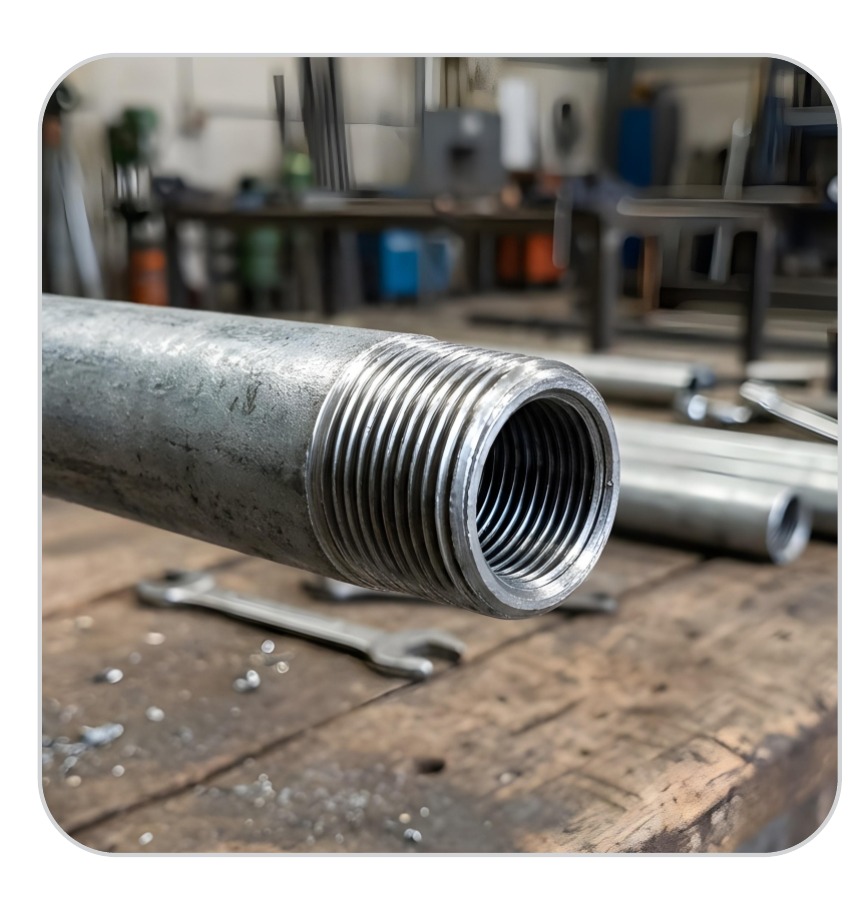
Depending on customer requirements and application standards, threading operations are performed on pipe ends using precision threading machines. Accurate threading ensures proper fitment, leak-proof jointing, and easy installation in plumbing, industrial, firefighting, construction, and engineering applications. The threading process is carried out with strict dimensional control to maintain compatibility and operational reliability.
InputInspected tubes→OutputThreaded tube ends- Thread profile
- Gauge check
- End finish
-
16
 Dispatch readiness
Stage 16 Dispatch readiness
Dispatch readiness
Stage 16 Dispatch readinessFinishing & Packaging
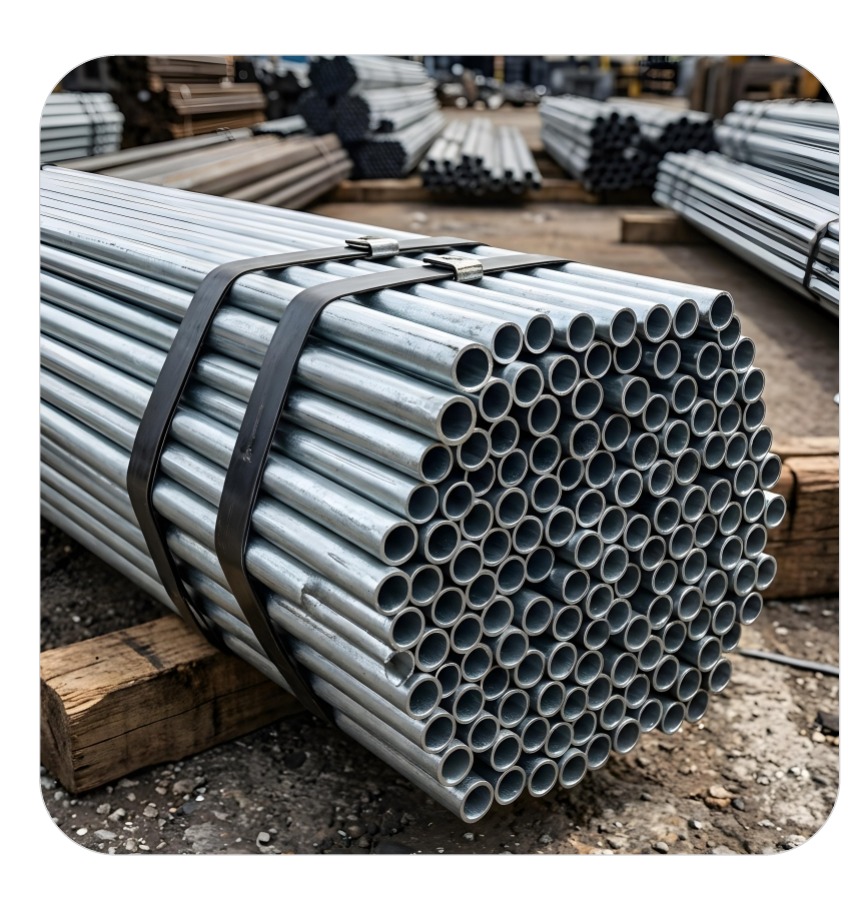
The finished pipes and tubes are carefully bundled, packed, labeled, and secured using suitable packaging methods to prevent physical damage, moisture exposure, and handling defects during storage and transportation. Proper packaging ensures safe delivery, efficient inventory management, and product protection throughout the supply chain until final dispatch to customers.
InputFinished tubes→OutputDispatch-ready bundles- Final inspection
- Identification and marking
- Bundle protection
Checks matched to every material and product family.
Open a category to see the controls used through incoming material verification, forming, pressure testing, coating and final inspection.
01MS Billets
+
- Chemical analysis
- Spectrometer test
- Hardness test
- Dimension test
- Surface inspection
- Weight verification
02MS Strips
+
- Chemical analysis
- Tensile strength
- Thickness & width check
- Surface quality inspection
- Weight verification
03MS Pipes
+
- Dimension test
- Weld quality inspection
- Weight test
- UTM test
- Hydro test
04Galvanized Pipes
+
- Dimension & weight check
- Hydro test
- Zinc coating test
- Uniformity test
05Railing Tubes
+
- Dimension test
- Weld quality
- Surface finish inspection
06Single Door Frame
+
- Dimension accuracy test
- Weld joint inspection
- Surface finish test
- Weld quality inspection
- Strength test